Question Period - Wednesday, November 5, 2025
Wednesday, November 5, 2025
Question Period session with 6 exchanges between Hon. Pierre Poilievre (Leader of the Opposition, CPC) and Right Hon. Mark Carney (Prime Minister, Lib.). Average Question Rigor: 85. Average PM Spin: 64.
SESSION OVERVIEW

Pierre Poilievre
Leader of Opposition
(86%)
Question Rigor
SPINHIGH
SPIN
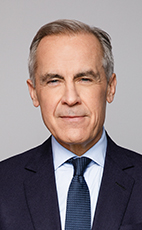
Mark Carney
Prime Minister
(64%)
Answer Directness
Pierre Poilievre
Leader of the Opposition
“Mr. Speaker, never before in history has a budget forced Canadians to pay so much for so little. Every dollar that the Prime Minister spends comes out of the pockets of Canadians. He broke his promises. He promised to spend less, yet he is increasing net spending by an additional $90 billion. That amounts to $5,400 per family. He has doubled Justin Trudeau's deficit and has added more debt than in any year outside of the COVID‑19 crisis. At a time when Canadians cannot pay their bills, why is the Prime Minister forcing them to pay even more?”
Clarity & specificity
85%
B — The question is clear and specific, citing evidence about spending and debt, but the preamble is somewhat lengthy.
Question Factors
- •Clear specific ask
- •Cites evidence
- •Focused on budget impact
Mark Carney
Prime Minister
“Mr. Speaker, Canada is in a strong fiscal position. We have the second-lowest deficit in the G7, the lowest net debt in the G7 and a budget that is investing in Canada. On this side of the House, we believe in Canada.”
How directly answered
62%
Sharp question met with evasive response.
D- — The answer does not engage with the specifics of the question and avoids addressing the concerns raised.
Answer Factors
- •Complete deflection
- •No engagement with evidence
- •Generic talking points
Pierre Poilievre
Leader of the Opposition
“Mr. Speaker, this Prime Minister is becoming the most costly Prime Minister in the history of our country, and it is actually the bankers who stand to benefit the most. Now the interest on the national debt is going to cost Canadians $55 billion. That is more than we spend on health transfers, and it is more than the government takes in from the GST. Every penny that Canadians pay in GST does not go to nurses and doctors, but rather to bankers. Why does the Prime Minister want to take money that should go to health care and hand it over to bankers instead?”
Clarity & specificity
85%
B — The question is clear and specific, citing evidence about national debt and healthcare funding.
Question Factors
- •Clear and specific ask
- •Cites specific evidence
- •Engages with a relevant issue
Mark Carney
Prime Minister
“Mr. Speaker, first of all, the debt burden as a share of GDP is lower now than it was when the Conservative government was in power. Second, we are investing in Canada and protecting transfers to the provinces for health care, education and social services.”
How directly answered
70%
Question clear, answer evasive on healthcare funding.
C- — The answer partially addresses the question but avoids the core issue of healthcare funding.
Answer Factors
- •Acknowledges debt but deflects from healthcare funding
- •Provides some relevant context
- •Lacks engagement with specific evidence cited
Pierre Poilievre
Leader of the Opposition
“Mr. Speaker, never before have Canadians had to spend so much to get so little. The budget, with its record deficit outside of COVID, has a deficit twice the size of the one Trudeau left behind and $16 billion bigger than the Prime Minister promised. It has, in its spending, $5,400 of extra costs for every family, in more expensive government. While Canadians are already unable to eat, heat and house themselves, why is the Prime Minister's costly budget making them pay even more?”
Clarity & specificity
85%
B — The question is clear and specific, citing evidence about budget deficits and costs to families.
Question Factors
- •Clear and specific evidence cited
- •Direct question at the end
- •Focus on current economic issues
Mark Carney
Prime Minister
“Mr. Speaker, 75% of the budget's measures are for our sovereignty: to protect our borders, to protect our communities and to protect our way of life. The balance is for affordability, a middle-class tax cut the member opposite missed because he was not here. The budget invests in Canada at twice the rate of any budget during this millennium. We believe in Canada.”
How directly answered
65%
Strong question, but PM avoided the core issue.
D — The answer does not directly address the question about budget impacts on families.
Answer Factors
- •Vague references to budget measures
- •Avoids specifics on costs to families
- •Generic statements about investment without engagement
Want the worst 5 dodges every Friday? Join the newsletter or subscribe here:
Pierre Poilievre
Leader of the Opposition
“Mr. Speaker, it is twice as expensive as any other budget, and it makes generational debt. Speaking of sovereignty, what about food sovereignty? The Prime Minister's budget increases taxes on food production. With the industrial carbon tax on farm equipment, fertilizer, storage bins and food processing plants, Sylvain Charlebois, Canada's food professor, says it is arguably the most damaging aspect of the Liberal carbon tax. It is a tax across the supply chain that undermines the competitiveness of our agri-food sector. Why is the Prime Minister threatening our food sovereignty and driving up our food prices?”
Clarity & specificity
88%
B+ — The question is clear and well-evidenced, focusing on specific impacts of the budget on food sovereignty and prices.
Question Factors
- •Clear and specific ask
- •Cites expert opinion
- •Addresses a relevant topic
Mark Carney
Prime Minister
“Mr. Speaker, in the spring, the government removed the divisive consumer carbon tax, and that has a consequence for any business, any farm, that emits less than 50 kilotonnes, which is every farm across this country. The Canadian Climate Institute has done the analysis on the impact of the industrial carbon tax on inflation. It is zero.”
How directly answered
62%
Sharp question met with vague dismissal.
D- — The answer dismisses the question without engaging with the evidence provided.
Answer Factors
- •Flat denial of impact
- •Does not address specific claims
- •Generic response without evidence engagement
Pierre Poilievre
Leader of the Opposition
“Mr. Speaker, apparently the Prime Minister is still under the misconception that Canadians do not use steel. Do members remember that interview when he asked the CTV interviewer, Steve, if he used steel? Of course, farmers use steel in order to produce their food and in order to store their grains. Processors use steel in the apparatuses of their conveyor belts. The tax on fertilizer and equipment drives up the cost of food, not according to Conservatives, but according to Sylvain Charlebois. Is the Prime Minister going to tell Canadians that an industrial carbon tax on Canadian farmers is not driving up the price of groceries?”
Clarity & specificity
85%
B — The question is clear and specific, citing evidence.
Question Factors
- •Clear question structure
- •Cites specific evidence
- •Directly addresses a relevant issue
Mark Carney
Prime Minister
“Mr. Speaker, the impact of the industrial carbon tax on food prices in Canada is approximately zero.”
How directly answered
60%
Question ignored; PM provided a flat denial.
D- — The answer dismisses the question without engagement.
Answer Factors
- •Flat denial of the impact
- •No engagement with cited evidence
- •Complete deflection of the core issue
Pierre Poilievre
Leader of the Opposition
“The Prime Minister still thinks we use zero steel, Mr. Speaker. On another subject, unfortunately a much darker subject, last week, the Supreme Court ruled that a one-year prison sentence was too much for possession of child abuse and exploitation materials. That sentence was already far too low for the two dirtbags who had literally hundreds of impressions and videos of children being tortured. Will the Prime Minister do the right thing and invoke the notwithstanding clause in order to put the rights of children ahead of the rights of those who abuse them?”
Clarity & specificity
85%
B — The question is clear and specific, directly asking about invoking the notwithstanding clause.
Question Factors
- •Clear and specific ask
- •Cites a recent Supreme Court ruling
- •Addresses a serious issue
Mark Carney
Prime Minister
“Mr. Speaker, I am sure I join all members of this House in condemning the exploitation of children as the most reprehensible source of crime. That is why this government will be bringing forth legislation to combat these crimes and penalize those who are responsible that works within our Constitution.”
How directly answered
65%
Question clear, answer evasive and non-specific.
D — The answer acknowledges the issue but avoids the specific ask.
Answer Factors
- •Condemns child exploitation
- •Mentions upcoming legislation
- •Does not address the notwithstanding clause
Like grading politicians? Get the Top 5 every Friday.
The week's worst dodges, delivered free to your inbox.