SESSION OVERVIEW
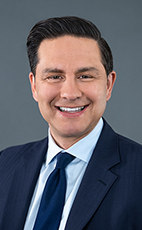
Pierre Poilievre
Leader of Opposition
(86%)
Question Rigor
SPINHIGH
SPIN
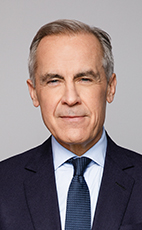
Mark Carney
Prime Minister
(53%)
Answer Directness
Question Period session with 6 exchanges between Hon. Pierre Poilievre (Leader of the Opposition, CPC) and Right Hon. Mark Carney (Prime Minister, Lib.). Average Question Rigor: 86. Average PM Spin: 53.
Questions & Answers
Pierre Poilievre
Leader of the Opposition
“Mr. Speaker, there are three federal and Liberal taxes on gasoline: the excise tax, the Liberal Prime Minister's new carbon tax that they call the clean fuel standard and the GST, which is charged on both of those. Despite skyrocketing prices and the rising cost of living, the Prime Minister only wants to suspend one of these taxes, and that is the result of pressure from the Conservatives. Why not follow the Conservative plan to save consumers 25¢ a litre by getting rid of all the Liberal taxes for the whole year?”
Clarity & specificity
88%
B+ — The question is clear and specific, outlining multiple taxes and a direct ask about suspending them all.
Mark Carney
Prime Minister
“Mr. Speaker, the government has a comprehensive plan to make life more affordable for Canadians, and that includes suspending the excise tax on gasoline, lowering taxes for the middle class and providing the Canada groceries and essentials benefit and other programs. All of that amounts to $20,000 per family per year.”
How directly answered
65%
Sharp question met with vague talking points.
D — The answer does not address the specific ask about suspending all taxes.
Pierre Poilievre
Leader of the Opposition
“Mr. Speaker, a year into this Liberal Prime Minister's mandate, the poor and the middle class are suffering. That is according to Statistics Canada, which published a report indicating that the gap between the rich and everyone else is greater than ever. This Prime Minister prints money, which causes inflation, and inflation makes billionaires richer and drives up the cost of living for everyone else. The gas tax is a tax on the poor. It is a tax on groceries, a tax on people in need. Why does the Prime Minister not want to get rid of all Liberal gas taxes so as to help the poorest people in Canada?”
Clarity & specificity
90%
A- — Clear question with specific evidence and a direct ask.
Mark Carney
Prime Minister
“Mr. Speaker, first of all, I am the Prime Minister of Canada, not the Premier of Ontario, the Premier of Quebec or the Premier of British Columbia. The biggest gas taxes are provincial taxes. Second, Canada's inflation rate is lower than the Bank of Canada's target. Moreover, Canadians' wages have gone up by 4.7% per year, which is about double the inflation rate.”
How directly answered
60%
Sharp question met with deflection and evasion.
D- — Ignores specific ask, focuses on provincial taxes.
Pierre Poilievre
Leader of the Opposition
“Mr. Speaker, there are three Liberal taxes on gasoline. There is the excise tax and there is the new Liberal carbon tax they call the fuel standard, and then they charge the GST on those other two taxes. With Canada having the highest grocery price inflation in the G7 and paying 20% more at the pumps, we put pressure on the Prime Minister, and he has partially backed down, removing only one of those taxes and only for a third of the year. Why does the Prime Minister not follow our full plan to reduce gas prices by 25¢ a litre by getting rid of all the taxes for all the year?”
Clarity & specificity
90%
A- — Clear question with specific evidence and a direct ask.
Mark Carney
Prime Minister
“Mr. Speaker, what the government is proposing is to cut the excise tax, 10¢ a litre for gasoline and four cents on diesel. We have already cut the consumer carbon tax, 18¢ per litre. We are recycling all the excess revenues from higher oil prices to Canadians. What we are not doing is what the Leader of the Opposition is proposing, which is to substantially increase the deficit, something he is regularly against, by more than $3 billion, because the government can count.”
How directly answered
70%
Good question, but PM avoided the core ask.
C- — Mostly deflected, some relevant information provided.
Pierre Poilievre
Leader of the Opposition
“Mr. Speaker, what he is not doing is increasing the deficit? It is only up by 100% since he took office. Does he even read his own budget, or does he want Canadians not to know what is inside? In fact, there is all the money printing that he does, because he is famous for causing inflation and has made a career out of it. Statistics Canada has made it clear that the gap between rich and poor is now greater than it has ever been, in a report published just this week. One of the biggest taxes on the poor is the gas tax. Instead of just removing a third of the tax for a third of the year, why not get rid of the entire Liberal tax on gas for the whole year?”
Clarity & specificity
85%
B — The question is clear and specific, asking why the PM won't eliminate the gas tax entirely, but it has some rhetorical elements.
Mark Carney
Prime Minister
“Mr. Speaker, one thing I have learned in my economics education is that one has to study history and look at numbers. My record as a central bank governor is inflation less than 2% at the Bank of Canada and inflation less than 2% at the Bank of England. Let us get back to where we are today, which is that wages in this country are growing at more than twice the rate of inflation. I will spell it out for the member opposite: That means Canadians are getting ahead.”
How directly answered
62%
Sharp question met with total deflection.
D- — The answer does not address the gas tax question and instead focuses on wage growth, which is unrelated.
Pierre Poilievre
Leader of the Opposition
“Mr. Speaker, it is clear that the Prime Minister has learned all the wrong lessons. Not only did he cause the housing crisis in London and not only did he cause the worst inflation in the G7 when he was the bank governor over there, he advised Justin Trudeau to print money here, causing inflation. Since arriving in Canada, he has given us the worst food price inflation in the G7, the worst investment in the G7, the worst housing costs in the G7 and the worst household debt in the G7. Why does the Prime Minister not learn his lesson from all the failed economic experiments that only benefit insiders with tax havens like him, and get rid of all the taxes on gas for all of the year?”
Clarity & specificity
75%
C — Question has multiple claims but lacks a clear focus.
Mark Carney
Prime Minister
“Mr. Speaker, oh dear, oh dear, oh dear, I feel like I am in the presence of students. On that account, I do not think the Leader of the Opposition would pass the exam with those answers. As the IMF confirmed yesterday, Canada will have the second-fastest growth in the G7 this year. As the IMF confirmed yesterday, we have the best fiscal position in the G7, point final. As we have confirmed, we have the highest foreign direct investment per capita in the world.”
How directly answered
50%
Sharp question met with total deflection.
F — Complete deflection, no engagement with the question.
Pierre Poilievre
Leader of the Opposition
“Mr. Speaker, what we have over there is inflation of Liberal arrogance. Right now, the Prime Minister wants to tell Canadians that they have never had it so good, when food prices are rising faster in Canada than in any other country in the G7, when Canadian households are the most indebted in the G7, when Canadian housing costs are the most elevated in the G7 and when, just today, RBC reported that we have the worst investment in the G7. The question again is this. Canadians cannot afford gas at the pump. Why not get rid of all the taxes for all the year?”
Clarity & specificity
85%
B — The question is clear and specific, citing multiple pieces of evidence regarding inflation and taxes.
Mark Carney
Prime Minister
“Mr. Speaker—”
How directly answered
10%
Total dodge. PM talked about everything except the question.
F — The Prime Minister did not answer the question at all.
Like grading politicians? Get the Top 5 every Friday.
The week's worst dodges, delivered free to your inbox.