Question Period - Tuesday, November 25, 2025
Tuesday, November 25, 2025
Question Period session with 6 exchanges between Hon. Pierre Poilievre (Leader of the Opposition, CPC) and Right Hon. Mark Carney (Prime Minister, Lib.). Average Question Rigor: 81. Average PM Spin: 64.
SESSION OVERVIEW

Pierre Poilievre
Leader of Opposition
(83%)
Question Rigor
SPINHIGH
SPIN
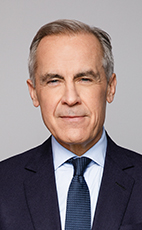
Mark Carney
Prime Minister
(64%)
Answer Directness
Pierre Poilievre
Leader of the Opposition
“Mr. Speaker, in his 28 trips, the Prime Minister has failed to reduce a single foreign tariff imposed on Canadians, but he has made gains for Brookfield. A few days after the Prime Minister's meeting with President Trump, the President signed an agreement to buy 80 billion dollars' worth of nuclear products from Brookfield. The Prime Minister is now spending $500 million on Europe's space program, which is located on Brookfield's campus. Every time the Prime Minister travels, Canadians get poorer and Brookfield, his company, gets richer. Why?”
Clarity & specificity
75%
C — The question raises specific issues but lacks clarity in the ask.
Question Factors
- •Cites specific instances and figures
- •Questions the PM's actions
- •Lacks a clear, focused interrogative
Mark Carney
Prime Minister
“Mr. Speaker, as usual, the Leader of the Opposition needs to check his numbers. The Indonesian government is reducing tariffs on 95% of Canadian goods and services. What is more, the government of the United Arab Emirates is going to invest $70 billion in our country.”
How directly answered
65%
Question lacked clarity; answer completely deflected.
D — The answer deflects and does not address the question.
Answer Factors
- •Dismisses the question without engaging with specifics
- •Provides unrelated information
- •Ignores the core ask about tariffs
Pierre Poilievre
Leader of the Opposition
“Mr. Speaker, since the Prime Minister was elected, promising to negotiate a win with the U.S., American tariffs on autos, aluminum and steel have doubled, and on Canadian lumber, they have tripled. Not a single American tariff has been reduced since he promised he would reduce them. Now he says, “Who cares?” I care about the 3,000 auto workers that I met on the picket line in Brampton who are out of a job. I care about the eight mills that have closed because the Prime Minister failed to deliver a deal. The workers on those lines, they care. Canadians care. Why does the Prime Minister not care?”
Clarity & specificity
90%
A- — Clear question with specific evidence and a direct ask.
Question Factors
- •Specific evidence cited (tariffs, job losses)
- •Direct question at the end
- •Engages with real-world impact on workers
Mark Carney
Prime Minister
“Mr. Speaker, since I became Prime Minister, Canada has secured the lowest tariffs of any country in the world. On 85% of our goods, the tariffs are zero. Yes, there are sectors, the auto sector, the steel sector, the lumber sector and the aluminum sector, that are under pressure. We care. We are acting in those sectors. There will be announcements this week of further support.”
How directly answered
70%
Sharp question met with vague reassurances.
C- — Mostly deflected, did not address specific evidence.
Answer Factors
- •Acknowledged sectors under pressure but avoided specifics
- •Generic statements about tariffs without addressing the question
- •Did not engage with the evidence of job losses
Pierre Poilievre
Leader of the Opposition
“Mr. Speaker, before the election, the Prime Minister promised elbows up. After, it was, “Who cares?” Before the election, the Prime Minister said the tariffs were an existential crisis. Now he says they are not a burning issue. Before the election, the Prime Minister promised to negotiate a win. After, he backed down to American tariffs. Those tariffs have now doubled on Canadian aluminum, autos and steel and tripled on Canadian lumber. Before the election, the Prime Minister promised the fastest-growing economy in the G7. After, he delivered the fastest-shrinking economy. Why is the Prime Minister before the election so different from the one after?”
Clarity & specificity
85%
B — The question is clear and specific, citing multiple instances of the Prime Minister's contradictory statements.
Question Factors
- •Clear structure
- •Specific evidence cited
- •Direct interrogative at the end
Mark Carney
Prime Minister
“Mr. Speaker, on the night of the election, when I had the great honour from my constituents of being elected as a deputy of this House, unlike some others in the Chamber today, I made a promise to Canadians. When I make a mistake, I will admit it. That was a poor choice of words about a serious issue, and the serious issue is the progress we are making structurally: the best deal in the world, the strongest budget in the world and the most new trade deals in the world.”
How directly answered
62%
Sharp question met with total deflection.
D- — The answer does not address the specific issues raised in the question and instead focuses on a general statement about promises.
Answer Factors
- •Complete deflection
- •No engagement with cited evidence
- •Generic talking points
Want the worst 5 dodges every Friday? Join the newsletter or subscribe here:
Pierre Poilievre
Leader of the Opposition
“Mr. Speaker, the Prime Minister did make a mistake. He has made many mistakes. In fact, it has been nothing but mistakes when it comes to trade. Let us look at it. The Prime Minister promised that he would negotiate a win on softwood lumber. Now he says, “Who cares?” Well, Conservatives care. Within 80 days of former prime minister Stephen Harper taking office, he managed to eliminate American tariffs on softwood lumber and get refunds for them. The current Prime Minister has now had eight months, and those tariffs have now more than tripled. The Prime Minister asks, “Who cares?” I can say, on behalf of all the MPs on this side, we care about the jobs that are being lost in lumber towns. Why does he not?”
Clarity & specificity
85%
B — The question is clear and specific, citing evidence about softwood lumber tariffs and the impact on jobs.
Question Factors
- •Clear specific ask
- •Cites evidence
- •Focuses on a relevant issue
Mark Carney
Prime Minister
“Mr. Speaker, this government cares about creating jobs in this country. That is why we proposed a budget before this House that catalyzes $1 trillion of investment over five years. The member opposite and his colleagues, those who could make it into the room, voted against that budget, voted against Canadian workers and voted against Canada's future. We believe in this country, and we are building it strong.”
How directly answered
62%
Sharp question met with generic deflection.
D- — The answer does not address the specific question about softwood lumber tariffs and instead deflects to a general statement about job creation.
Answer Factors
- •Complete deflection
- •No engagement with cited evidence
- •Generic talking points
Pierre Poilievre
Leader of the Opposition
“Mr. Speaker, while Chinese, American, Indian and other tariffs have only gone up since the Prime Minister began his 28-trip journey around the world, he has not had a single, solitary win. In fact, the only wins he has had are for Brookfield. Just days after he met with the President, Trump signed on to $80 billion of nuclear purchases from Brookfield, and then he gave $500 million of our tax money to the European Space Agency, located on Brookfield's campus. Why is it that whenever the Prime Minister spends his time and our money, Canadians end up poorer and he and Brookfield end up richer?”
Clarity & specificity
75%
C — The question has a clear ask but is somewhat convoluted.
Question Factors
- •Specific evidence cited
- •Clear interrogative structure
- •Lengthy preamble detracts slightly from clarity
Mark Carney
Prime Minister
“Mr. Speaker, not for the first time, the Leader of the Opposition needs to check his numbers. The government of Indonesia is reducing tariffs on 95% of Canadian goods. Canada has the best deal with the United States; 85% of our goods are tariff-free. The United Arab Emirates has just confirmed that they want to invest $70 billion in this country. They believe in Canada's future. Why do the members opposite not?”
How directly answered
62%
Question deflected with unrelated statistics.
D- — The answer deflects and does not address the core question.
Answer Factors
- •Ignores specific claims about tariffs
- •Focuses on unrelated positive statistics
- •No engagement with the evidence presented
Pierre Poilievre
Leader of the Opposition
“Mr. Speaker, the Prime Minister arrived just a few days after Brookfield's CEO, lining up with the same interests that are not Canadian interests. Speaking of Canadian interests, the Prime Minister opposed the pipeline from Alberta to the Pacific, just as his Liberal predecessor blocked that same pipeline. On Thursday, he will make one of his grand announcements, waving around a meaningless so-called memorandum of understanding. If it is anything other than a public relations ploy, why will he not say on what date the construction will begin on a pipeline from Alberta to the Pacific?”
Clarity & specificity
85%
B — The question is clear and specific, asking for a date on pipeline construction, but the preamble is somewhat lengthy.
Question Factors
- •Clear ask for a specific date
- •Cites previous actions for context
- •Some rhetorical elements in the preamble
Mark Carney
Prime Minister
“Mr. Speaker, sometimes the question reveals everything. The memorandum of understanding that we are negotiating with Alberta creates necessary conditions, but not sufficient conditions, because we believe in co-operative federalism. We believe the government of British Columbia has to agree. We believe that first nations right-holders in this country have to agree and support all stakeholders after that. That is one Canada.”
How directly answered
62%
Sharp question met with vague principles.
D- — The answer does not address the specific question about the pipeline date and instead discusses broader principles.
Answer Factors
- •Complete deflection from the specific ask
- •Generic statements about cooperation
- •No engagement with the question's context
Like grading politicians? Get the Top 5 every Friday.
The week's worst dodges, delivered free to your inbox.