Question Period - Tuesday, December 9, 2025
Tuesday, December 9, 2025
Question Period session with 6 exchanges between Hon. Pierre Poilievre (Leader of the Opposition, CPC) and Right Hon. Mark Carney (Prime Minister, Lib.). Average Question Rigor: 84. Average PM Spin: 61.
SESSION OVERVIEW

Pierre Poilievre
Leader of Opposition
(83%)
Question Rigor
SPINHIGH
SPIN
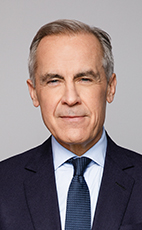
Mark Carney
Prime Minister
(61%)
Answer Directness
Pierre Poilievre
Leader of the Opposition
“Mr. Speaker, Canada needs a pipeline to the Pacific Ocean so we can sell more of our products overseas, somewhere other than the U.S. It will make our economy more independent and strengthen the Canadian dollar and the purchasing power of all Canadians. The Prime Minister has always been against it, but he flip-flopped last week in Alberta. When he came back to Ottawa, there was a rebellion among his MPs. I took the words straight from his agreement. Is he going to vote against his own words, or can Canadians believe what he says?”
Clarity & specificity
85%
B - The question is clear but somewhat rhetorical.
Question Factors
- •Specific ask about voting against his words
- •Context provided about pipeline importance
- •Rhetorical elements dilute focus
Mark Carney
Prime Minister
“Mr. Speaker, a memorandum of understanding is not something one can pick and choose from. The Leader of the Opposition took a few words from the agreement, but not all of them. He forgot to mention the stronger industrial carbon price. He forgot to mention methane regulations. He forgot to mention carbon neutrality by 2050. The Conservatives need to eat the whole meal, not just the meat.”
How directly answered
65%
Question clear, answer evasive and unrelated.
D - The answer deflects and does not address the question.
Answer Factors
- •Does not directly answer the question
- •Focuses on unrelated details
- •Ignores the core ask about the Prime Minister's commitment
Pierre Poilievre
Leader of the Opposition
“Mr. Speaker, eating the whole meal would be great if only Canadians could afford to buy the meal. He is talking about a carbon tax that still applies to farm equipment, to fertilizer and to those who deliver food. This has caused food inflation to the point that it now costs $17,000 a year to feed a family of four. Why will he not cut hefty taxes on groceries so Canadians can feed their families?”
Clarity & specificity
92%
A- — Clear question with specific evidence cited.
Question Factors
- •Specific data on food costs mentioned
- •Direct ask about cutting taxes
- •Context provided about carbon tax impact
Mark Carney
Prime Minister
“Mr. Speaker, there is no carbon tax on Canadian farms that emit less than 50 kilotonnes of greenhouse gas emissions. That is the first point. The second point is that the impact of the industrial carbon tax on food prices in Canada is virtually zero, according to the Canadian Climate Institute.”
How directly answered
65%
Question well-posed, answer completely sidestepped.
D — Answer deflects and does not engage with evidence.
Answer Factors
- •Flat denial of carbon tax impact
- •No engagement with food inflation claims
- •Focus on unrelated emissions threshold
Pierre Poilievre
Leader of the Opposition
“Mr. Speaker, Canada needs a pipeline to the Pacific to sell $30 billion of our energy overseas, outside of the U.S. market, making us more independent and self-reliant, and our dollar, and therefore Canadians' purchasing power, stronger. The Prime Minister always opposed the pipeline, which his party killed, but last week he flip-flopped and promised, in a deal while he was in Alberta, that he would build such a pipeline. I took the very wording right out of that deal and put it into a motion before the House of Commons. He experienced a massive rebellion in his own caucus. If he is going to vote against his own words, how can Canadians ever believe his words?”
Clarity & specificity
85%
B — The question is clear and specific, citing evidence about the pipeline and the Prime Minister's previous statements, but it could be more focused on a single ask.
Question Factors
- •Clear context provided
- •Specific evidence cited
- •Multiple competing questions weaken focus
Mark Carney
Prime Minister
“Mr. Speaker, as the Canadian national cricket team knows, we have to play the whole T20. It is not just a couple of overs. It is not just the pipeline. It is not just Pathways. It is an industrial price on carbon that goes to $130 effective. It is reductions in methane. It is net zero by 2050. It is building Alberta strong and Canada strong, durable, sustainable and—”
How directly answered
50%
Sharp question met with total deflection.
F — The answer completely deflects from the question asked and does not engage with the specifics raised.
Answer Factors
- •No engagement with the pipeline issue
- •Uses unrelated analogy
- •Ignores the core question about credibility
Want the worst 5 dodges every Friday? Join the newsletter or subscribe here:
Pierre Poilievre
Leader of the Opposition
“Mr. Speaker, I took the wording for the motion right out of the Prime Minister's deal. If he votes against the motion, he is voting against a pipeline to the Pacific; he is voting against overriding the discriminatory and anti-Canadian ban on shipping our energy abroad; he is voting against consultation with first nations people and the British Columbian government, and he is even voting against his own beloved carbon capture and storage, all of which I took word for word right out of his own deal. If the Prime Minister is in favour of pipelines only when he is in Alberta, but against them when he is in B.C. and Ottawa, how can Canadians keep track of where he stands on anything?”
Clarity & specificity
75%
C — The question is somewhat clear but lacks focus on a specific ask.
Question Factors
- •Long preamble with multiple points
- •Questions the PM's consistency
- •Calls out specific policies but lacks a direct question
Mark Carney
Prime Minister
“Mr. Speaker, I would like to welcome the fact that to my hearing, for the first time ever in the House, the Leader of the Opposition has acknowledged the constitutional right of indigenous people to full, free and fair consultation. This is the first time he has ever acknowledged the role of the provinces in these pipelines, but he has not yet acknowledged the need for an industrial carbon price or the reduction in methane, two things the Premier of Alberta acknowledged and signed off on wholeheartedly, as part of a complete meal.”
How directly answered
62%
Question lacked focus; answer completely sidestepped.
D- — The answer does not address the question directly.
Answer Factors
- •Acknowledges a point but does not answer
- •Focuses on unrelated topics
- •No engagement with the specifics of the question
Pierre Poilievre
Leader of the Opposition
“Mr. Speaker, not only do we acknowledge the obligation to consult with our first peoples, but we put it right in the motion. It is right there for the Prime Minister. We put it right there so the Prime Minister could vote for the words that he put in the agreement, but let us be honest: He never planned to honour the agreement. He whispered quietly to the “keep it in the ground” Liberal caucus, “Don't worry; there will never be a pipeline. We'll delay it until after the election, and then, God forbid, if we win, we would kill it altogether.” Why can the Prime Minister not say one thing to all Canadians and champion the pipeline with us today?”
Clarity & specificity
75%
C — Question lacks clarity and focus.
Question Factors
- •Long preamble
- •Multiple competing assertions
- •Vague ask about championing the pipeline
Mark Carney
Prime Minister
“Mr. Speaker, the MOU between the Government of Canada and the Province of Alberta is about a pipeline. It is about carbon capture and storage. It is about interties with the clean electricity grid of British Columbia. It is about artificial intelligence data centres. It is about an industrial carbon price that works. It is about methane regulations that bring methane down 75% so we can have the lowest-emission, low-risk, lowest-cost oil in the world and build this country.”
How directly answered
65%
Question muddled; answer completely sidestepped.
D — Answer avoids the core question entirely.
Answer Factors
- •Does not address the pipeline commitment
- •Focuses on unrelated topics
- •No engagement with the question's specifics
Pierre Poilievre
Leader of the Opposition
“Mr. Speaker, we put the interties proposal right in the motion, right out of the Prime Minister's deal. We put the carbon capture right in the motion, right out of his deal. We put the pipeline and the overriding of the oil shipping ban right in the motion. It came right out of the deal that he signed. Now it is clear that the only thing the Prime Minister really cares about is that it does not include an industrial carbon tax that would drive jobs out and drive grocery prices up. Why is it that the Prime Minister wants a carbon tax without a pipeline, when what we really need is a pipeline without a carbon tax?”
Clarity & specificity
85%
B — The question is focused and specific, but somewhat rhetorical.
Question Factors
- •Clear specific asks about carbon tax and pipeline
- •Cites previous agreements
- •Rhetorical framing could be clearer
Mark Carney
Prime Minister
“Mr. Speaker, the grand reveal has been made. I am not a lifelong member of the House, so I do not know all the rules, but I do not think there is a limit on the size of motions. In fact since the MOU is already translated, it would be very easy to take the entire MOU, in both official languages, and propose them, if the members opposite would support everything that the Premier of Alberta has done.”
How directly answered
60%
Sharp question met with total deflection.
D- — The answer does not address the question directly.
Answer Factors
- •Complete deflection from the core question
- •No engagement with the evidence cited
- •Focus on unrelated procedural issues
Like grading politicians? Get the Top 5 every Friday.
The week's worst dodges, delivered free to your inbox.